


When Should You Brush Your Teeth? Your Timing Questions Answered
If you ask people how often they should brush their teeth, nearly everyone gets it right. Ask when, and the answers start to wander. Research from the Oral Health Foundation found that UK adults are more than twice as likely to skip brushing at night (39%) as in the morning (19%). As it turns out, that’s exactly the wrong way round.
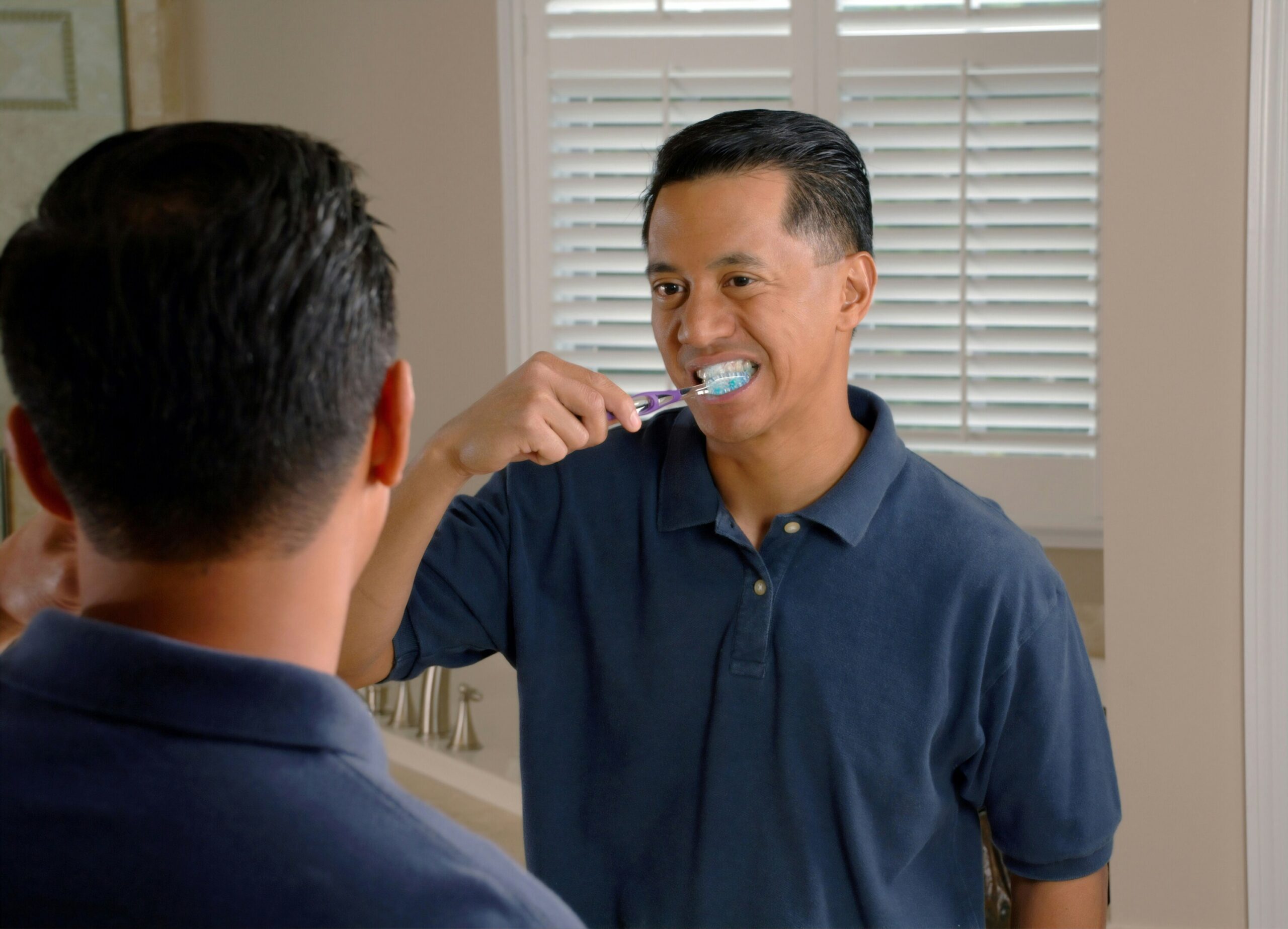
Which brush of the day matters most?
The night-time one. NHS guidance is to brush for about two minutes, twice a day, with one of those brushes last thing before bed. Dr Nigel Carter, chief executive of the Oral Health Foundation, has described the bedtime brush as “the most important brush of the day”. It clears away the plaque that has built up since the morning, and it leaves fluoride on your teeth as you sleep, as long as you don’t rinse it off.
The second brush can happen whenever suits your routine. The Oral Health Foundation simply recommends one other time during the day.
Should I brush before or after breakfast?
There’s no official rule on this one, but the advice on acid helps you decide. Acidic food and drink temporarily softens tooth enamel. Try waiting at least an hour after eating or drinking before you brush, so the enamel has time to harden again; brushing too soon can gradually wear it away.
In practice, that gives you two good options. You can brush when you get up, before you eat. Or you can have breakfast and wait an hour. What’s best avoided is brushing straight after a glass of orange juice on your way out of the door.
Is it bad to brush straight after eating?
The same principle applies to any meal, particularly one with acidic food or drink. If you want your mouth to feel fresher in the meantime, chew sugar-free gum, which boosts saliva, or finishing your meal with milk or cheese to help neutralise acid.
Where do flossing and mouthwash fit in?
Clean between your teeth before you brush, not after, using floss or interdental brushes. These get into the small gaps between your teeth and help clear out any stuck food particles. Mouthwash is different. Don’t use it straight after brushing, even a fluoride one, because it washes away the toothpaste’s fluoride. Use it at another time of day, such as after lunch, and then avoid eating or drinking for 30 minutes.
Does what I do after brushing matter?
More than most people realise. Spit out the excess toothpaste but don’t rinse with water, since rinsing dilutes the fluoride left behind. For adults, we recommend a toothpaste with at least 1,350ppm fluoride.
What about children?
The same timings apply, but younger children need a hand or should be supervised when brushing until they’re at least seven. Our children’s dentistry team is always happy to share tips for making bedtime brushing less of a battle.
Frequently Asked Questions
Is brushing once a day enough?
Twice a day is the recommendation. Even so, the Oral Health Foundation’s research found that almost a quarter of adults mostly brush just once.
How long should I brush for?
About two minutes each time.
Does it matter whether I use an electric or manual toothbrush?
Not for timing. According to the NHS, both are equally good as long as you clean every surface of your teeth and use fluoride toothpaste, though some people find an electric brush easier to use well.
Should I brush my teeth after lunch at work?
You don’t need to if you’re brushing twice a day. Lunchtime is a good moment for mouthwash or sugar-free gum instead.
Want personal advice on your brushing routine?
Our direct access hygiene service means you can see one of our dental hygienists without needing a dentist’s referral first. Book online or call Holland Park Dental Centre on 020 7603 4155. You can also contact us with any general dentistry questions or concerns and we’ll be happy to put your mind at rest.
Sorry, the comment form is closed at this time.